Melbourne Herald Sun, Friday December 30, 2011
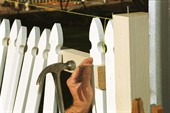
If you’re taking some time off this Christmas season, my bet is that part of the time will be spent in your jeans and runners, hammer or paintbrush in your hand, doing a bit of renovating.
The amount depends on whether the place is owned or rented, but this is the perfect time to get those things done that have been bugging you all year. Rest assured that you will not be alone in these tasks.
A major result to come from the astronomical house prices and the prohibitive cost of changing homes, is that renovation is back in a big way.
Take Bunnings. Their annual report was able to boast a 5.7 per cent sales growth when so many other retailers were bemoaning a declining market. And they opened a further 27 of their huge stores around the country. That’s an awful lot of hammers and nails.
Dulux also told a happy story at this month’s AGM. Home renovation has been a major factor in driving their underlying net profit close to $80 million this year.
We know that these increases were not caused by new home building because the Housing Industry Association reports a further decline in new residential work. This past year’s new housing starts were down by five percent, and the HIA predict that next year’s will be twice as bad.
This is hard to understand, at a time when existing houses are so over-priced and the need for more homes so obvious. Meanwhile, the September quarter saw renovations hit a new high of $2 billion.
Like all the rest of Australian retail, hardware is going bi-polar. Bunnings have ruled the roost for years now, squeezing the other chains like Mitre 10 and Thrifty-Link, forcing them to grow big or disappear.
But another chain of aircraft-hanger sized stores has started moving in, armed with lots of street cred.
Where Bunnings is part of Westfarmers, which owns Coles, it completes that mogul's royal flush of dominance in the marketplace from coal and fertiliser to retail chains and stationery to fuels and hardware.
Of course Woolworths wants its own toolkit, too. And now they have it. In partnership with American hardware giant Lowe's, they have started building the Masters hardware chain. The first opened recently in Braybrook in the City of Maribyrnong. Another 150 are already on the drawing boards.
This is a market where you have to be big to survive. If you've ever renovated you'll know what it's like - you desperately need an articulated gusset to fill the hole you've made in the wall but the first couple of local stores are too small to stock the range you need. You drive the extra miles to Bunnings, and that becomes a habit whenever you need something.
Mitre 10 know this and are rapidly building bigger stores, now bankrolled by grocery distributor Metcash who bought into the franchise chain this year.
The other big franchiser, Thrifty-Link, have announced the theme of their conference at the end of January: fighting back at the competition.
Even though Woolworths have committed $100 million to the Masters roll-out, they will open at most 20 a year. So it will be quite a while before they are able to stand toe to toe with Bunnings' 289 stores and trade centres.
Now finish your coffee, fold this newspaper, pick up your paintbrush and get back to work on the house. And do be sure to have a very happy - and productive - New Year.
ray@ebeatty.com
Blog: themarketeer-raybeatty.blogspot.com
Ray is a marketing and advertising expert with 40 years' experience. He's a popular columnist in Australia's biggest newspaper The Melbourne Herald Sun, with one and a half million readers every day. His witty, perceptive look at marketing has been popularised by The Gruen Transfer and found a new audience. Use the search bar above for any topic that comes to mind. You'll be surprised at what you find! (c) Ray Beatty ray@ebeatty.com
Showing posts with label Christmas. Show all posts
30 December, 2011
25 November, 2011
How do you get the shoppers back to the shops?
Herald Sun, Friday November 25, 2011
Like the waves pounding on the Bass Strait coast, the changes in our buying patterns roll in relentlessly. It’s a natural phenomenon with no regard to the damage being wreaked on ships and shore. Great sandstone cliffs can be worn to collapse and carried away in the undertow.
Just last week the Australian National Retailers Association declared it is making an effort to cling to Christmas. Together with Commercial Radio Australia they have started a campaign nominally priced at $5 million, although much of it is advertising provided by the radio stations.
Having listened to the campaign commercials and read the literature on their web site, I can only find one word to describe it: wet.
Wet as in weak and mealy-mouthed. They do not actually tell us who they need protection from. Is it the multinational invaders? The booming on-line shopping industry? The strangling, selfish supermarket giants? But no-one is targeted, which means the campaign will never hit its mark.
The commercials themselves are awful. If they are the best that the combined brains of our Australian radio industry can produce - well that confirms my sadness at the creative decline of radio in this country.
There are major problems facing the retailers and they do need help from us, their customer base. But they will not make a difference by bombarding us with figures.
They tell us there are 140,000 retailers. That’s a lot. And they employ 1.2 million people. Yep that’s a lot. But somehow these figures do not give me the need to leap for my wallet.
The bright-voiced announcer goes on that these are mums, dads, uncles, aunties, sons and daughters. Yup... most people are.
But we’re talking here about winning back the hearts and minds of a population that is drifting elsewhere. From the retail strip to the mega-mart. From the local cafĂ© to the multinational chain.
Most worryingly, away from shops altogether. You might remember my column a couple of weeks ago, featuring the subway wall in Seoul which had been converted into a virtual market. Commuters can order their groceries with a click of their mobile phones.
To combat these waves of progress, we need to be more cunning. The campaign needs to give our mums and dads et cetera, a reason to want to visit shops.
Any campaign planing should start with the question: what would make people prefer the jostle of a busy street to the canned music of the supermarket? Or, the bigger threat, the comfort of their livingroom computer?
Mandy Vere, writing in Britain’s Guardian newspaper, summed it up: “They have goods for you to peruse and handle, feel and read; free p&p; the joy of serendipity; live, and often knowledgeable, staff – sometimes even with smiles and conversation.”
You can feel the cloth and put on the shoes, enjoy the variety of choice and explore shops you had never seen before. It is this physical, emotional experience that needs to be communicated, not statistics.
When New York’s Department of Commerce wanted to promote its city and state, in 1977, it hired the hottest agency in town, Wells Rich Greene, and the great graphic artist Milton Glaser.
Because they gave the job to the best they got a campaign that was brilliant in its simplicity: I Love New York -
It’s still running today, and every city in the world has picked up the graphic - just take a look at the souvenir shops in Swanston Street.
I’m sorry retail association and radio stations, I give you an F for your campaign, with the note: “Engage your hearts and start again”.
ray@ebeatty.com
Subscribe to:
Posts (Atom)

